How Spain Plans to Convince Drivers to Switch to Electric Cars
Discover how Spain plans to drive electric vehicle adoption with €1.7 billion in incentives, tax breaks, and charging infrastructure through 2025 and beyond.
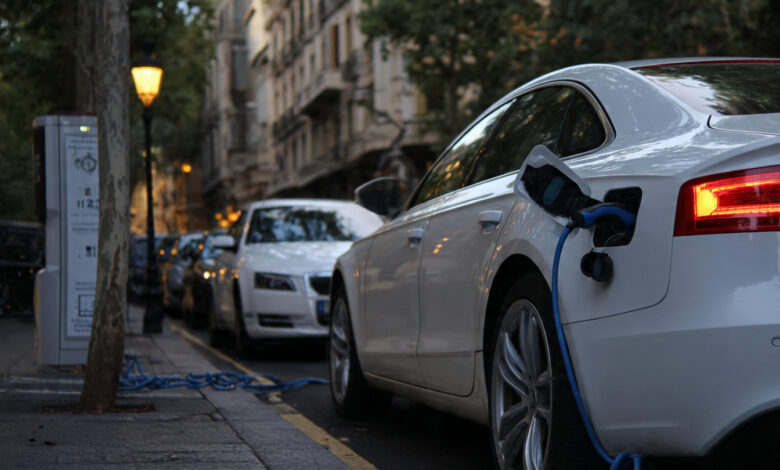
Spain is racing against time to transform its automotive landscape from combustion engines to electric vehicles. While the country has long been Europe’s second-largest car manufacturer, it’s lagged behind neighbors like Norway, Germany, and France in EV adoption. But that’s changing fast. The Spanish government has launched an ambitious strategy involving billions in subsidies, streamlined tax breaks, and a massive charging infrastructure rollout to convince drivers that going electric isn’t just good for the planet, it’s good for their wallets too.
The challenge is real. Spain sits near the bottom of Europe’s electric mobility rankings, with electric cars making up just over 12% of new vehicle sales in recent years. High upfront costs, patchy charging networks, and lingering range anxiety have kept many Spanish drivers clinging to their diesel and petrol vehicles. But Prime Minister Pedro Sánchez’s government is betting that a combination of financial incentives, infrastructure investment, and industrial policy can flip the script. With the MOVES III program now extended through 2025 and the new Spain Auto 2030 Plan promising an additional €700 million in 2026, the message is clear: Spain is going all-in on electric.
The Financial Push: Making Electric Cars Affordable
Direct Purchase Subsidies That Actually Work
The cornerstone of Spain’s electric vehicle strategy is the MOVES III program, which has been extended until December 31, 2025, with a fresh injection of €400 million. This brings the total budget for electric mobility incentives to an impressive €1.735 billion since the program launched.
Here’s what Spanish buyers can get:
- Up to €7,000 in subsidies for purchasing a new electric passenger car
- An additional €2,000 if you scrap an older vehicle (10+ years old)
- Up to €9,000 for commercial vehicles, helping businesses transition their fleets
- 70-80% coverage for home charging station installation costs (up to €5,000)
The real game-changer comes in 2026 with the Auto+ Plan. Unlike MOVES III, where buyers often waited months or even years for reimbursement, the new system will provide instant point-of-sale discounts. You walk into a dealership, pick your electric car, and the subsidy gets applied directly to your invoice. No paperwork nightmares, no waiting around. The government learned from past mistakes when some buyers had to wait up to two years for their money.
Tax Breaks That Keep on Giving
Beyond direct subsidies, Spain offers a comprehensive package of tax incentives for electric vehicles:
Personal Income Tax Deduction: Buyers can claim 15% of their vehicle’s purchase price against their income tax, up to a maximum deduction of €3,000. Some regions like Castilla y León sweeten the deal even further, offering up to €4,000.
Registration Tax Exemption: Battery electric vehicles are completely exempt from Spain’s CO₂-based registration tax, saving buyers thousands right out of the gate.
Reduced Annual Road Tax: Electric vehicles qualify for up to 75% reduction in the annual local road tax in major cities like Madrid, Barcelona, and Valencia.


VAT Deductions for Businesses: Companies can deduct VAT fully on electric vehicles used exclusively for professional purposes, making fleet electrification more attractive.
Combined with the direct subsidies, Spanish buyers can potentially save up to €10,000 on an electric vehicle purchase, putting Spain among the top EU countries for EV incentives.
Tackling Range Anxiety: The Charging Infrastructure Blitz
Where Spain Stands Today
As of mid-2025, Spain has approximately 46,000 public charging points spread across the country. That sounds impressive, but there’s a catch. About 60% of these chargers are concentrated in just three regions: Madrid, Catalonia, and Andalusia. Rural areas and smaller cities remain underserved, creating “charging deserts” that fuel range anxiety among potential buyers.
The distribution is also skewed toward slower chargers. While Spain has made progress on fast charging infrastructure, with around 8,600 fast chargers (50kW or higher) operational, that’s still a fraction of what’s needed to support the government’s target of 5 million electric vehicles by 2030.
The €300 Million Solution: MOVES Corridors
The government’s answer to charging infrastructure gaps is the MOVES Corridors program, which will invest €300 million specifically in eliminating “shadow zones” along Spain’s major transport routes. This targeted approach focuses on:
- Highway coverage: Installing fast chargers every 60 kilometers along major corridors to meet EU requirements
- Tourist routes: Ensuring visitors can drive electric vehicles throughout Spain without anxiety
- Rural connectivity: Bringing charging infrastructure to underserved areas where market forces alone won’t deliver
- Urban expansion: Supporting cities in building out their charging networks for residents without private parking
Leading operators like Iberdrola, Endesa X, Repsol, and Zunder are partnering with the government to deploy this infrastructure. Iberdrola alone has committed to installing over 200,000 charging points across Spain by 2030, including public, residential, business, and parking facilities.
Private Charging: The Home Advantage
Spain recognizes that most EV charging happens at home. The MOVES III program subsidizes up to 70% of home charging installation costs (80% in small municipalities), with grants reaching up to €5,000. Over 113,000 private charging points have been co-financed through this scheme, helping apartment dwellers and homeowners alike make the switch.
This is crucial in a country where over 75% of people live in multi-unit dwellings. Spain has simplified regulations to make it easier for apartment communities to install shared charging infrastructure, removing bureaucratic barriers that previously discouraged installation.
Industrial Strategy: Building an EV Economy
Spain Auto 2030: More Than Just Subsidies
The Spain Auto 2030 Plan represents a holistic approach to electric mobility that goes beyond consumer incentives. Prime Minister Sánchez unveiled this €30 billion strategy with three main objectives:
Manufacturing Transformation: Spain aims for 95% of vehicles produced in the country to be electrified by 2035. The plan includes €580 million for the PERTE VEC program, which supports battery production, component manufacturing, and critical materials refining.
Job Protection: The automotive sector employs 1.9 million people in Spain. The plan focuses on maintaining these jobs while transitioning to electric vehicle production, which requires less labor than traditional manufacturing.
Domestic Innovation: Rather than just assembling foreign designs, Spain wants to design and engineer its own electric vehicles, creating what Sánchez calls “an affordable Spanish electric car.”
Chinese Investment and European Competition
Spain’s low manufacturing costs and robust renewable energy network have attracted significant Chinese investment. CATL is building a €4 billion battery plant in Figuerelas that will supply Stellantis factories starting in 2026. BYD is also considering Spain for its third European factory, following similar moves in Hungary and Turkey.
This foreign investment brings both opportunities and challenges. While it creates jobs and builds infrastructure, Spain must balance welcoming investment with protecting its domestic industry and ensuring fair competition.
Overcoming the Barriers: What’s Holding Adoption Back
The Cost Conundrum
Despite generous subsidies, electric vehicles remain expensive. Research shows that EVs in Spain are on average 40% more expensive than equivalent combustion engine models. A Renault Master electric van costs 73.8% more than its diesel counterpart. Even with €10,000 in combined incentives, many middle-class families find the upfront cost prohibitive.
The government initially projected that battery cost reductions would achieve price parity by 2025, but that hasn’t materialized. Battery prices have indeed dropped nearly 90% over the past decade, but electric vehicles still command a premium that deters budget-conscious buyers.
Infrastructure Gaps and Regional Inequality
Spain’s charging infrastructure suffers from significant regional disparities. Madrid has reached only 12% of its required 2030 charging capacity, while Catalonia sits at just 22%. Meanwhile, regions like Castile and León and Navarre have achieved around 40% of their targets.
These uneven rollouts create a patchwork experience for EV drivers. You might have excellent charging coverage in Seville but struggle to find a fast charger driving through rural Extremadura. The national average utilization rate for chargers is just 18%, peaking in major urban areas but dropping below 5% in rural zones.
Knowledge Gaps and Misconceptions
Many Spanish drivers simply don’t understand electric vehicle technology. Concerns about battery life, charging times, winter performance, and resale values persist, even when data shows EVs often outperform combustion vehicles on safety and reliability metrics.
Research indicates that groups with significant EV knowledge are far more likely to consider purchasing one, highlighting the importance of education campaigns. The government has created working groups to engage industry stakeholders, autonomous communities, and municipalities in promoting electric mobility awareness.
The Policy Framework: How Spain Governs the Transition
EU Alignment and National Targets
Spain’s electric vehicle strategy aligns with European Union mandates under Fit for 55 and the Alternative Fuels Infrastructure Regulation (AFIR). The AFIR requires at least one 150kW charger every 60 kilometers along major highways by 2025, driving much of Spain’s infrastructure investment.
The National Integrated Energy and Climate Plan (PNIEC) sets ambitious targets:
- 5.5 million electric vehicles on Spanish roads by 2030
- 32% reduction in greenhouse gas emissions by 2030 compared to 1990 levels
- 120,000-140,000 public charging points to support the growing EV fleet
These targets integrate with Spain’s broader decarbonization strategy, which aims to leverage the country’s significant renewable energy capacity (currently about 46% of generation) to power a clean transportation system.
Regulatory Simplification
One major complaint about previous EV programs was bureaucratic complexity. The MOVES III extension addresses this by:
- Simplified applications: Subsidies under €100,000 can be justified using simplified accounting
- Faster approvals: Municipalities must approve charging station installations within 30 days
- Centralized portals: Regional governments have established online application portals
- Retroactive coverage: The 2025 extension applies to purchases made from January 1 onward
The new Auto+ Plan for 2026 will be managed centrally by the national government rather than autonomous communities, eliminating the inconsistent distribution and payment delays that plagued earlier schemes.
Low-Emission Zones and Urban Policies
Major Spanish cities are creating low-emission zones that increasingly restrict or charge fees for combustion vehicles. Madrid Central, Barcelona’s ZBE, and similar initiatives in Valencia and other cities provide preferential access to electric vehicles, making them more practical for urban residents who face parking restrictions or access fees.
These urban policies work hand-in-hand with national incentives, creating a carrot-and-stick approach that makes electric vehicles increasingly attractive while gradually phasing out combustion engines.
Market Response and Industry Perspective
Sales Trends and Consumer Behavior
Electric vehicle sales in Spain have shown encouraging growth despite challenges. In 2024, battery electric vehicle registrations increased 7.8%, and the first quarter of 2025 saw electrified vehicle sales surge 45% compared to the previous year. December 2024 was particularly strong, with BEV registrations jumping 48.2% year-over-year.
However, plug-in hybrid sales declined 4.9%, and other electrified segments like electric vans dropped 26.7%, showing uneven adoption across vehicle categories. The overall share of electrified vehicles (BEV + PHEV) dipped slightly to 11.4% of total sales in 2024, down from 12% in 2023.
Leading models in the Spanish market include the Tesla Model 3, Tesla Model Y, MG4, and increasingly, Chinese brands like BYD. The BYD Dolphin, Atto 2, Seal, and Atto 3 all rank among the top-selling electric models, reflecting the growing influence of Chinese manufacturers.
Industry Concerns and Demands
Automotive industry associations like ANFAC and GANVAM have welcomed the government’s renewed commitment but emphasize the need for consistent, predictable policy. The industry’s main complaints about previous programs centered on timing rather than funding amounts.
Key industry demands include:
- Immediate payment systems: The point-of-sale discount model planned for 2026 addresses this
- Long-term certainty: Clear multi-year programs that allow manufacturers and dealers to plan
- Fleet incentives: Enhanced support for corporate fleet electrification
- Infrastructure coordination: Better alignment between vehicle subsidies and charging infrastructure rollout
The Spain Auto 2030 Plan appears designed to address these concerns, but industry leaders caution that implementation will be the true test.
Looking Ahead: Will Spain’s Strategy Work?
The 2030 Reality Check
Spain’s target of 5.5 million electric vehicles by 2030 is ambitious, arguably overly so. At current adoption rates, reaching even half that target would be challenging. The country would need to sustain annual EV sales growth of 25-30% for five consecutive years while simultaneously building out charging infrastructure capacity from 1.1 GW to 5.2 GW.
Several factors could derail these plans:
- Economic uncertainty: Recession or financial pressures could reduce consumer spending on expensive purchases
- Geopolitical tensions: Supply chain disruptions for batteries and critical materials remain a risk
- Technology shifts: Breakthrough technologies or changing EU policies could alter the timeline
- Public resistance: If subsidy delays or infrastructure problems persist, consumer confidence could erode
Success Factors to Watch
Spain’s electric vehicle transition will succeed or fail based on several key factors:
Execution speed: The government must avoid repeating the MOVES III delays. Fast, reliable subsidy payments and rapid infrastructure deployment are essential.
Regional coordination: Closing the gap between well-served regions and lagging areas will determine whether EVs become truly practical nationwide.
Price competitiveness: Even with incentives, if electric vehicles remain 30-40% more expensive than combustion alternatives, mass adoption will stall.
Consumer education: Overcoming misconceptions and range anxiety requires sustained public awareness campaigns.
Manufacturing investment: Attracting battery plants, component suppliers, and vehicle assembly facilities will determine whether Spain becomes an EV producer or just a market.
The European Context
Spain doesn’t operate in isolation. Its success depends partly on EU-wide policies, particularly the planned 2035 ban on new combustion engine vehicle sales. France, Germany, and the Netherlands are all pushing aggressive EV strategies, creating competitive pressure for Spain to keep pace.
The country’s strong renewable energy sector gives it an advantage. With nearly half of electricity generation from renewables, Spain can credibly claim that its electric vehicles run on clean power, addressing lifecycle emissions concerns that plague EV adoption in coal-dependent countries.
Spain’s Electric Gamble
Spain has laid out an impressive blueprint for electric vehicle adoption. With €1.735 billion committed through MOVES III, another €700 million coming through Spain Auto 2030, and €580 million for industrial transformation, the financial commitment is substantial. The shift to instant point-of-sale subsidies addresses the biggest consumer complaint about previous programs. Targeted charging infrastructure investment tackles range anxiety. Tax breaks make EVs more economically attractive over their lifetime. Yet success is far from guaranteed. Spain is playing catch-up with Northern European leaders while simultaneously trying to protect 1.9 million automotive jobs during a fundamental industrial transformation. The government must balance attracting Chinese investment with supporting domestic manufacturers, expand charging networks while managing grid capacity, and convince price-sensitive consumers to pay premiums for unfamiliar technology. The next two years will be crucial. If Spain can demonstrate that its reformed subsidy system works, infrastructure gaps close, and electric vehicles become genuinely practical for average families, the country could achieve the mass adoption it seeks. But if delays persist, regional inequalities widen, or economic pressures mount, the ambitious 2030 targets will remain just that—ambitious targets rather than achieved reality.