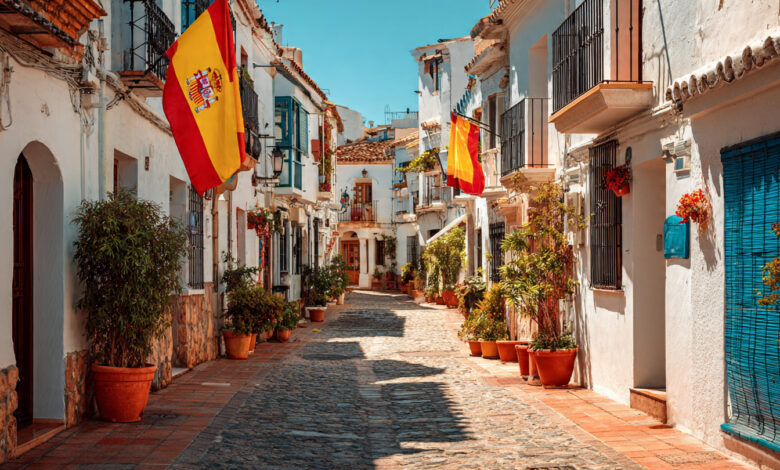
Moving to Spain has become increasingly popular among expats, digital nomads, and retirees seeking a better quality of life. The combination of affordable cost of living in Spain, excellent healthcare, rich culture, and year-round sunshine makes this Mediterranean country incredibly appealing. However, relocating to Spain involves more than just booking a flight and finding an apartment. Understanding visa requirements, navigating Spanish bureaucracy, and adapting to the local culture are essential steps for a successful transition.
Whether you’re drawn to Barcelona’s vibrant energy, Madrid’s cosmopolitan atmosphere, or the coastal charm of Valencia and Málaga, proper planning will make your move to Spain much smoother. The Spanish lifestyle emphasizes work-life balance, social connections, and enjoying the simple pleasures of life, but it also comes with its own set of challenges. From securing your NIE number to understanding Spanish healthcare, there’s a lot to consider before making this life-changing decision.
This comprehensive guide covers the nine most important things you need to know when planning to move to Spain. We’ll walk you through visa options, financial requirements, finding accommodation, navigating the healthcare system, and adapting to Spanish culture. By the end of this article, you’ll have a clear roadmap for your Spanish adventure and know exactly what steps to take to ensure your relocation is successful and stress-free.
1. Understanding Spanish Visa Requirements
The type of Spain visa you need depends entirely on your nationality, purpose of stay, and financial situation. Non-EU citizens cannot simply arrive and stay indefinitely. If you’re planning to live in Spain for more than 90 days, you’ll need a long-term visa or residency permit.
Popular Visa Options for Moving to Spain
The non-lucrative visa is one of the most popular options for retirees and those with passive income. For 2025, you’ll need to demonstrate €28,800 annually for the main applicant, plus €7,200 for each dependent. This visa doesn’t permit you to work in Spain, but it does provide a pathway to permanent residency after five years.
The digital nomad visa works well for remote workers employed by companies outside Spain. You’ll need to show at least €2,763 monthly income (200% of Spain’s minimum wage), proof of employment for at least three months, and either a university degree or three years of relevant work experience. This visa allows you to work remotely while enjoying the Spanish lifestyle.
For those with employment offers from Spanish companies, a work visa is necessary. Your employer typically initiates this process, and the visa is tied to your specific job contract. Student visas are available for those pursuing educational programs at recognized Spanish institutions.
Application Timeline and Costs
Start your Spanish visa application process 3-6 months before your planned move. Most applications are processed through Spanish consulates in your home country. The entire timeline from application to approval typically takes 4-8 months. Budget between $5,000 and $15,000 for the complete moving process, including visa fees, travel costs, and initial setup expenses.
According to Spain’s official immigration documentation, all visa applications require comprehensive documentation including passport copies, financial statements, health insurance proof, and criminal background checks. Missing or incorrect documents are the primary reason for application delays or rejections.

2. Obtaining Your NIE Number
Your NIE number (Número de Identificación de Extranjero) is arguably the most important document you’ll need when moving to Spain. This unique identification number functions as your tax identifier and is required for almost every official transaction in the country.
What You’ll Need Your NIE For
You cannot open a Spanish bank account, purchase property, buy a car, sign a rental contract, apply for utilities, or register for healthcare without your NIE number. It’s essentially your gateway to establishing your life in Spain. Some visa applications will provide you with an NIE upon approval, while others require you to apply separately.
The NIE is a permanent number that never changes, even if you later obtain Spanish citizenship. It’s printed on a green or white A4 document that you should keep safe. Many expats laminate their NIE certificate or keep certified copies in multiple locations.
How to Apply for Your NIE
You can apply for your NIE number at your local police station in Spain or at a Spanish consulate before you move. However, the process has become more complex in recent years. Most expats now use a “gestor” (a professional administrator) to handle the application, which saves considerable time and frustration. A gestor typically charges €50-100 for this service but can expedite the process from several weeks to just a few days.
3. Securing Health Insurance and Understanding Spanish Healthcare
Spanish healthcare consistently ranks among the best in the world, placing third globally for efficiency. However, accessing this system as a foreigner requires specific steps and, in most cases, private health insurance during your initial period in Spain.
Private Health Insurance Requirements
All long-term visa applicants must provide proof of comprehensive health insurance for Spain that meets strict requirements. The policy must provide full coverage without deductibles or co-payments, be valid for at least one year, cover all medical services equivalent to Spain’s public system, and be issued by a company authorized to operate in Spain.
Popular insurance providers include Sanitas, Adeslas, and Asisa. For a person in their 60s, expect to pay around €1,800 annually. Younger applicants can find policies for €600-1,000 per year. These policies must be paid in full upfront for visa applications.
Accessing Public Healthcare
Once you’re employed or self-employed in Spain and contributing to Social Security, you’ll gain access to the public healthcare system in Spain. This requires registering with Social Security, completing your empadronamiento (municipal registration), and enrolling at your local health center.
The process involves obtaining your NIE, registering for Social Security, proving your residence through empadronamiento, and finally visiting your assigned Centro de Salud to receive your health card. Public healthcare in Spain is excellent and completely free once you’re enrolled, though some expats maintain private insurance for faster specialist access and English-speaking doctors.
According to the Spanish Ministry of Health, after living in Spain for one year, non-working residents may apply for the Convenio Especial, a special agreement that allows access to public healthcare for a monthly fee of around €60-70.
4. Understanding the Cost of Living in Spain
The cost of living in Spain is significantly lower than in most Western European countries and much of the United States. However, expenses vary dramatically depending on which city or region you choose.
Housing Costs Across Major Cities
Living in Spain becomes much more affordable when you understand regional price differences. In Madrid, a one-bedroom apartment in the city center costs approximately €1,200-1,500 monthly, while the same apartment in smaller cities like Valencia or Málaga runs €800-1,000. Rural areas and smaller towns offer even better value, with decent apartments available for €600 or less.
Barcelona tends to be the most expensive city for accommodation in Spain, with central apartments reaching €1,500-2,000 monthly. However, living slightly outside the city center can reduce costs by 30-40%. Most rental contracts require a one or two-month deposit plus the first month’s rent upfront.
Daily Living Expenses
Groceries in Spain are notably affordable. A weekly shop for two people typically costs €50-70 at local markets and supermarkets. Fresh produce, olive oil, wine, and bread are particularly inexpensive. Dining out is also reasonable, with a menu del día (daily lunch special) costing €10-15 for a three-course meal including wine.
Transportation costs are manageable with monthly public transport passes ranging from €40-60 in major cities. Spain’s extensive train and bus networks make travel between cities affordable and convenient. Utilities (electricity, water, gas, internet) typically total €100-150 monthly for a standard apartment.
Budgeting for Your Move
A single person can live comfortably in Spain on €1,500-2,000 monthly outside major cities, while couples should budget €2,500-3,500. These figures include rent, groceries, utilities, transportation, entertainment, and dining out. Major cities like Barcelona and Madrid require higher budgets of €2,500-3,500 for singles and €3,500-5,000 for couples.
5. Finding the Right Accommodation
Finding accommodation in Spain requires patience and understanding of the local rental market. Start your search 3-4 months before your planned move, especially if targeting major cities with high demand.
Rental Market Considerations
The Spanish rental market moves quickly in popular cities. Properties that meet the price-quality sweet spot often receive multiple applications within days. Landlords typically prefer tenants with Spanish bank accounts, proof of income, and references. Having your NIE ready significantly streamlines the application process.
Popular platforms for finding rentals include Idealista, Fotocasa, HousingAnywhere, and local Facebook groups. Consider starting with a short-term rental or Airbnb for your first month while you search for permanent housing in person. This allows you to explore neighborhoods and assess proximity to amenities, public transportation, and your workplace.
Buying Property in Spain
Spain’s real estate market is relatively accessible for foreigners. Property prices outside major cities remain affordable compared to other European countries. However, purchasing property involves additional costs beyond the purchase price, including transfer taxes (6-10%), notary fees (0.5-1%), and registry fees (0.5%).
Working with a reputable real estate agent familiar with helping expats is crucial. They’ll guide you through the buying process, ensure proper legal documentation, and help navigate Spain’s property laws. Keep in mind that buying property doesn’t automatically grant you residency, though the Golden Visa program offers residency to those investing €500,000 or more.
6. Opening a Spanish Bank Account
A Spanish bank account is essential for living in Spain long-term. You’ll need it to pay rent, utilities, receive your salary, and complete most financial transactions. While it’s possible to manage initially with a foreign account, the fees for international transactions quickly add up.
What You’ll Need
To open a bank account in Spain, you’ll need your passport, your NIE number, proof of address in Spain (rental contract or empadronamiento), and in some cases, proof of income. Popular banks include Santander, CaixaBank, BBVA, and Sabadell. Many expats also appreciate online banks like N26 or Revolut for their English-language interfaces and lower fees.
Some banks charge monthly maintenance fees of €5-15, though these are often waived if you maintain a minimum balance or set up direct deposits. Having your Spanish bank account established early simplifies everything from paying your health insurance premiums to shopping online at Spanish retailers.
Currency Exchange Considerations
When moving money to Spain, avoid traditional bank transfers which often have unfavorable exchange rates. Services like Wise (formerly TransferWise) offer real exchange rates and significantly lower fees, sometimes up to 8 times cheaper than high street banks. This can save you hundreds or even thousands of euros depending on how much money you’re transferring.
7. Learning Spanish and Regional Languages
While you can survive in major Spanish cities speaking only English, learning Spanish dramatically improves your experience when moving to Spain. Nearly 60% of Spaniards don’t speak English fluently, and this percentage increases significantly outside tourist areas and major cities.
The Importance of Spanish Language Skills
Living in Spain without Spanish severely limits your ability to integrate socially, navigate bureaucracy, and build meaningful relationships. The language isn’t particularly difficult for English speakers since both share Latin roots. Even basic conversational Spanish opens doors to local communities and shows respect for Spanish culture.
Consider intensive language courses before or immediately after your move. Many cities offer affordable language schools, conversation exchanges, and free classes through local cultural centers. Apps like Duolingo, Babbel, and iTalki provide structured learning that you can complete at your own pace.
Regional Language Variations
Spain is linguistically diverse beyond Castilian Spanish. In Catalonia, Catalan is widely spoken alongside Spanish. The Basque Country uses Euskara (Basque), while Galicia has its own language, Galician. Valencia speaks Valencian, a dialect closely related to Catalan. While most people in these regions speak Spanish, learning some basics of the regional language shows cultural sensitivity and helps with integration.
8. Adapting to Spanish Culture and Lifestyle
Spanish culture differs significantly from Anglo-Saxon cultures in its approach to time, socializing, and work-life balance. Understanding and embracing these differences is key to enjoying your new life in Spain.
The Spanish Daily Schedule
One of the biggest adjustments when relocating to Spain involves adapting to different meal times and daily rhythms. Spaniards eat lunch between 2-3 PM, which is the main meal of the day. Dinner typically happens between 9-11 PM, much later than most foreigners expect. Restaurants don’t even open for dinner until 8-9 PM in most areas.
The traditional siesta is less common in major cities but still practiced in smaller towns and during summer months. Shops may close between 2-5 PM for the afternoon break. This isn’t about napping; it’s about avoiding the hottest part of the day and prioritizing a leisurely lunch with family or friends.
Work-Life Balance and Social Life
Spanish work culture emphasizes relationships and quality of life over constant productivity. Spain offers approximately 30 days of combined paid leave and public holidays, among the highest in Europe. Long lunches are expected, and eating at your desk is generally frowned upon.
Socializing happens late and often. Don’t be surprised when Spanish friends suggest meeting for drinks at 10 PM or dinner at midnight on weekends. Building friendships takes time as Spaniards tend to maintain close-knit social circles formed during childhood and university. However, once accepted, these friendships are deep and lasting.
Spanish Social Customs
When greeting someone for the first time, a handshake is appropriate. Once you know people better, expect two kisses on the cheek (right cheek first). Spaniards are generally warm, expressive, and speak with their hands. Direct communication is valued, though feedback in professional settings tends to be more indirect than in American business culture.
Dress codes are more formal than in many countries. Even casual outings warrant putting effort into your appearance. Business settings expect suits for men and business casual for women. The stereotype of Spaniards being late is somewhat true; arriving 10-15 minutes late to social gatherings is normal and not considered rude.
9. Navigating Spanish Bureaucracy
Spanish bureaucracy has a reputation for being slow and complex, and unfortunately, this reputation is well-earned. Patience and preparation are essential when dealing with government offices and official processes.
Understanding Empadronamiento
Empadronamiento is the process of registering your address with your local municipality. This certificate proves you live in Spain and is required for accessing healthcare, obtaining your NIE, enrolling children in schools, and countless other official procedures. Visit your local Ayuntamiento (town hall) with your passport, NIE, and proof of address (rental contract or utility bill).
Keep multiple certified copies of your empadronamiento certificate. You’ll need it repeatedly, and getting new copies each time wastes valuable hours at the town hall. This document must be renewed periodically, and letting it lapse can cause problems with other official procedures.
Dealing with Government Offices
Spanish government offices often require appointments booked weeks in advance through online systems that can be frustrating to navigate. Arrive early to appointments, bring more documentation than you think necessary, and have copies of everything. Many offices provide limited assistance in English, so bringing a Spanish-speaking friend or hiring a gestor is often worthwhile.
The concept of “mañana” (tomorrow) is real in Spanish bureaucracy. Processes that should take days often take weeks or months. Rather than getting frustrated, adjust your expectations and build in extra time for everything official. Online expat forums and local expat Facebook groups are invaluable resources for navigating bureaucracy and learning from others’ experiences.
Working with a Gestor
A gestor is a professional administrator who specializes in navigating Spanish bureaucracy. While they charge fees for their services, the time and frustration they save is often worth it. Gestors can handle tax filings, residency applications, business registrations, and various other administrative tasks. Many expats consider a good gestor essential to successfully living in Spain.
Conclusion
Moving to Spain offers incredible opportunities for personal growth, cultural enrichment, and improved quality of life. From the excellent Spanish healthcare system and affordable cost of living to the emphasis on work-life balance and social connections, there’s a reason thousands of expats choose Spain each year. However, successful relocation to Spain requires thorough preparation, patience with bureaucracy, and willingness to adapt to a different cultural rhythm. By securing the right visa, obtaining your NIE number, arranging proper health insurance, learning Spanish, and understanding the local culture, you’ll set yourself up for success. The key is starting early, doing thorough research, and maintaining realistic expectations. With proper planning and an open mind, your Spanish adventure can be everything you’ve dreamed of and more.